In 1947, A High-Altitude Balloon Crash Landed in Roswell. The Aliens Never Left

In Roswell, New Mexico, exactly seven decades ago this month, the first little green men arrived.

But we’re getting ahead of ourselves.

Let’s start closer to the beginning. On June 14, 1947, a rancher named W.W. “Mac” Brazel and his son Vernon were driving across their ranchland some 80 miles northwest of Roswell when they encountered something they’d never seen before. It was, in Brazel’s words, “a large area of bright wreckage made up of rubber strips, tinfoil, and rather tough paper, and sticks.

The metallic-looking, lightweight fabric was scattered, shredded across the gravel and sagebrush of the New Mexico desert. Brazel didn’t know what to do with the newfound items, or how they had landed on the property, so on July 4 he collected all of the mysterious wreckage he could find. On July 7, he drove it all to Roswell, delivering the goods to Sheriff George Wilcox.

Wilcox, too, was confounded.

Seeking answers, he contacted Colonel “Butch” Blanchard, commander of the Roswell Army Airfield’s 509th composite group, located just outside of town. Blanchard was stymied. Working his way up the chain of command, he decided to contact his superior, General Roger W. Ramey, commander of the 8th Air Force in Fort Worth, Texas.

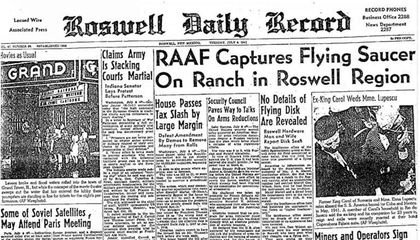
Blanchard also sent Major Jesse Marcel, an intelligence officer from the base, to investigate more thoroughly. Accompanied by the sheriff and Brazel, Marcel returned to the site and collected all of the “wreckage.” As they tried to ascertain what the materials were, Marcel chose to make a public statement. On July 8, Marcel’s comments ran in the local afternoon newspaper, the Roswell Daily Record, alongside a headline stating “RAAF Captures Flying Saucer on Ranch in Roswell.”

The body of the story contained a dramatic, memorable sentence: “The intelligence office of the 509th Bombardment Group at Roswell Army Air Field announced at noon today, that the field has come into the possession of a Flying Saucer.”

“Apparently, it was better from the Air Force’s perspective that there was a crashed ‘alien’ spacecraft out there than to tell the truth,” says Roger Launius, the recently-retired curator of space history at the Smithsonian’s National Air and Space Museum in Washington, D.C.

“A flying saucer was easier to admit than Project Mogul,” Launius adds, a chuckle in his voice. “And with that, we were off to the races.”

It was after the close of World War II, a time when nuclear weapons cast a long shadow. Truth-telling was not a priority, and there were remarkably unusual events underscoring the situation at hand.

Everywhere you looked in 1947, the global, social and political chessboard was being re-divided. The Soviet Union began to claim eastern European nations for itself in a new post-war vacuum. Voice of America started broadcasting in Russian to the eastern bloc, peddling the principles of American democracy. The U.S. sent V2 rockets carrying payloads of corn seeds and fruit flies into outer space. The Bulletin of Atomic Scientists set the “Doomsday Clock” ticking, and the Marshall Plan was in the making to rebuild war-torn Europe. Small wonder that in the heat of summer that year, flying saucers became all the rage.

On June 21, Navy Seaman Harold Dahl claimed to have seen six unidentified flying objects in the sky near Maury Island in Washington state’s Puget Sound. The next morning, Dahl said he was sought out and debriefed by “men in black.”

UFO
“UFOs are exactly that. They’re unidentified objects seen in the air. But that’s not extraterrestrials,” says the Smithsonian’s Roger Launius. (Wikimedia Commons/Stefan-Xp)

Three days after the Dahl sighting, an amateur pilot named Kenneth Arnold said he had spotted a flying saucer in the sky by Mount Rainer, Washington.

“UFOs aren’t unusual,” Launius says. “They’re simply unidentified things you see in the sky. We’ve all probably seen them. And, if you look long enough, you’ll probably eventually figure out what it is you’re looking at. It’s not extraterrestrials.”

By the end of 1947, mass hysteria had seized the global mindset, with more than 300 alleged “flying saucer” sightings in the last six months of that year alone.

“Not that there was ever any credible evidence to support the sightings,” Launius adds.

By early July 1947, Brazel had heard tales of flying saucers in the Pacific Northwest. These sightings spurred him to show his discovery to the authorities, but just one day after the Air Force announced it had come into possession of a flying saucer, Roswell’s morning newspaper debunked the story.

A published statement from the War Department in Washington claimed the debris collected on Brazel’s ranch was the remains of a weather balloon, and the Roswell Dispatch’s morning headline, “Army Debunks Roswell Flying Disc as World Simmers with Excitement,” set the tale to rest on July 9.

“But we need to back it up, here,” says Launius. “What was really going on was something called Project Mogul.”

Roswell is home to the International UFO Museum and Research Center. (Wikimedia Commons/mr_t_77)

In this classified program, the U.S. government launched high-altitude balloons into the ionosphere, hoping to monitor Russian nuclear tests. “The Russians wouldn’t get a nuclear weapon until 1949,” Launius adds. “But we didn’t know that in 1947.”

And, Launius adds, thanks to the new, horrifyingly powerful weapon and a changing geopolitical landscape, it was a time of paranoia.

Still, if the rumor of extraterrestrial visitors had been put to rest by the government, it didn’t die as easily in the public mind.

“But that was it, really,” says Launius. “The debate was over. It was to be the end of speculation. According to the government, the matter was closed. The debris was from a weather balloon.”

Of course, though, that wasn’t the end.

There would be a 1948 report from the government about what was now being called the “Roswell Incident.” In 1950, Frank Scully, a reporter for Variety, wrote Behind the Flying Saucers, a book that detailed alien encounters from the Pacific Northwest to the towns of Aztec and Farmington, New Mexico, where aliens were now said to be landing their aircrafts in people’s backyards.

By then, enthusiasm for flying saucers had spread everywhere from Belgium to Russia and Japan. A rumor that had started as a convenient lie for the Air Force had become a distraction to the U.S. government, which was now deep into its nuclear weapons monitoring projects. “But there was no way the Air Force was going to admit what it was doing,” Launius says.

Lunch box
The idea of visitors from space has long been mass marketed in books, television and popular items for children. (NMAH)

Project Mogul was conducted out of Washington, D.C. and the Los Alamos National Laboratory in New Mexico, with some high-altitude balloon launches taking place in the high desert near the state’s border with Texas.

Typically, a Project Mogul balloon sent into high altitude stretched 657 feet from tip to tail, 102 feet taller than the Washington Monument and twice as tall as the Statue of Liberty.

As balloons rode on the upper jet stream toward Russia, a long tail equipped with different types of sensing and listening devices trailed behind.

“But, obviously, something happened to this one balloon,” Launius says. “It came back to Earth and probably was spread across a wide area.”

Although much of the documentation about Project Mogul has now been declassified, Launius says that civilian access to information failed to stop the lure of extraterrestrial life.

Because the U.S. government was now in a frenzy of nuclear testing—both in the South Pacific and, later, at the Nevada Test Site—the hermetic silence around classified government programs left a certain segment of citizens suspicious. The UFO sightings continued.

“Then we get to the late 1970s and early 1980s,” Launius says. “And that period saw a real spike in extraterrestrial interest, from movies to books and other things.”

Takeda Cosmetics for Men
“Then we get to the late 1970s and early 1980s,” says Roger Launius says. “And that period saw a real spike in extraterrestrial interest, from movies to books and other things.” (Poster, Takeda Cosmetics for Men, 1974, Cooper Hewitt National Design Museum)

Movies such as Star Wars, Close Encounters of the Third Kind and ET, plus dozens of books on the subject, brought aliens to the forefront of the public mindset once again.

“By that time,” Launius says, “people’s imaginations had gotten the best of them.”

Suddenly, there were rumors of regular extraterrestrial life on Earth, not to mention crashed spaceships. There were now stories of two alien ships crashing in New Mexico in June 1947, scattering their contents and tiny green crewmen across the landscape. Before long, any secret government property—from nuclear sites to engineering locations—was suspected to house deceased or imprisoned aliens.

Poster, Oshkosh B'gosh
Movies such as Star Wars,Close Encounters of the Third Kind and ET, plus dozens of books on the subject, brought aliens to the forefront of the public mindset. (Poster, Oshkosh B’gosh, Cooper Hewitt National Design Museum)

This was most evident at Area 51, an off-limits airstrip and aircraft engineering and development facility inside the Nevada Test Site, about 90 minutes north of Las Vegas. It was rumored that aliens from the Roswell spacecraft and other crashed ships were either being autopsied or slid into cylindrical glass tanks containing gel-like preservatives.

The government wasn’t helping to quell speculation, either. At their most secretive sites, they posted large, unambiguous “No Trespassing” signs, often with a reminder to those who entered illegally: “Use of Deadly Force Authorized.”

And the alien hysteria had gotten even wackier. By the early 1990s, with scant evidence to support it, a global UFO and extraterrestrial industry had come into existence. There were more movies. More books. More newspaper and magazine stories, more television news segments and shows focused on visitors from space.

In Roswell, the populace had been cashing in on the alien craze for some time. The town was home to the International UFO Museum and Research Center, and even a local Wal-Mart got into the spirit, decorating its walls and front windows with green-skinned, large-headed aliens. Roswell’s civic seal sports an artist rendering of an alien, and the exterior of the local McDonald’s in town has enough spacecraft-based accessories to look like a ship preparing to take off for some distant galaxy. Along the town’s Main Street, toy aliens, flying saucers and other extraterrestrial ephemera are sold in local shops.

Roger Launius has served as the chief historian of NASA and sat on several investigative panels discussing what might exist beyond Earth, but he seems more amused by the 70 years of hysteria surrounding the “Roswell Incident” than anything else.

“Well, all I really know,” he says, “is that UFOs are exactly that. They’re unidentified objects seen in the air. But that’s not extraterrestrials.
Ms Dhoni all you need to know about Captian cool

Once in a while, there arrives a cricketer who changes the way of the game. From Sir Don Bradman to Sachin Tendulkar and from Muttiah Muralitharan to Glenn McGrath, all left their marks and the world followed them. India’s very recent game-changer happens to be MS Dhoni. Also, he is one of the cricketers of the generation who has stamped himself firmly in the cricketing books. Know everything about him in this MS Dhoni biography

The describers of Captain cool run out of superlatives when talking about him. Such is the stature of the man that he leaves all of us amazed each time with his magic. India’s most successful captain is now a living legend. Certainly, he is the one that the young and aspiring cricketers follow. Not just from India, but all across the cricketing fraternity follow MS Dhoni.

MS Dhoni Biography

First of all, his is an inspirational story. The lads from the Urban cities like Delhi and Mumbai ruled cricket in India. MS hailed from a small town and reached at the helm of affairs. The desire to represent his nation kept him going despite all the troubles. And here he stands as the best leader the country has ever seen.

MS Dhoni Family and early days

As the number on his jersey suggests, Mahendra Singh Dhoni was born on 7th July 1981 in Ranchi Jharkhand.

His father, Pan Singh, is a former employee of MECON.

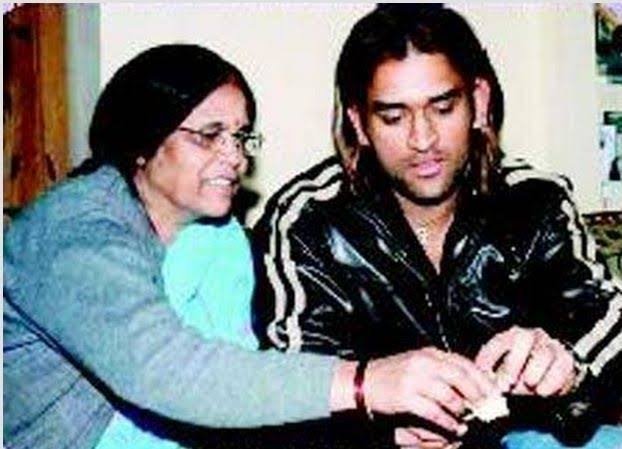
MS Dhoni’s mother, Devaki Devi is a housewife. Narendra Singh Dhoni is his elder brother, he is a politician. While his elder sister Jayanti Gupta is an English teacher.

He got married to Sakshi Singh Rawat in 2010 and the couple has a daughter named Ziva.

MS Dhoni early life

Why MS Dhoni biography became so famous because his story has everything from struggle, turning points, hard work, love, passion, success etc. That’s the reason why the movie made on him in Bollywood turned out to be a blockbuster.

Initially, it wasn’t cricket that MS turned to. He was the goalkeeper of his school’s football team, DAV Jawahar Vidya Mandir. One day, to fill in for the wicketkeeper of the cricket team, the coach sent him as a replacement. That was the turning point in his life. After that Dhoni adapted cricket and cricket adopted Dhoni.

His impressive performances as a wicketkeeper as well as a batsman gave him a prominent slot in the Commando cricket club team. He kept climbing ladders of success as a teenager. He went on to play Ranji for Bihar in 1999-2000. Dhoni scored an unbeaten 68 in his debut game. Then notched up a hundred against Bengal in the next season.

MS Dhoni: From a Railway servant to a cricketer

Playing in the domestic cricket builds a base for the long term but it didn’t ensure a wealthy life in those days. Hailing from a middle-class family, he had to look for additional ways to earn. Hence, he served as a Travelling Ticket Examiner (TTE) at Kharagpur railway station. A job that he secured with the sports quota.

From 2001 to 2003, he stayed with his job but was destined for something far bigger. Despite the family pressure to continue with the job, he kept putting the hard yards in on the cricket field. But the luck was not by his side as in spite of being picked in the Duleep Trophy squad for the East Zone, he couldn’t reach Agartala, the venue for the match, in time.

But it didn’t stop him. He kept going strong and forced the selectors to turn their attention towards him. Dhoni’s performances in the Ranji Trophy and the Deodhar Trophy didn’t go unnoticed and the 2003-04 season finally brought some good fortunes. He finished on the winning squad in the Deodhar Trophy and was picked for India A squad for the tour to Zimbabwe.

He was impressive in his stint with India A and the then captain of the national side, Sourav Ganguly saw something special in him. Eventually, MS Dhoni got he wanted all his life. In the year 2004-05, he was picked in the Indian squad for the Bangladesh tour. He did ODI debut against Bangladesh at MA Aziz Stadium, Dec 23, 2004.

The beginning of MS Dhoni in Indian cricket

He featured in his debut game and got run out for a duck. The whole series didn’t yield fruitful results but the selectors showed faith in him and gave him another go for the ODI series against Pakistan. The rivalry between India and Pakistan is the one that the whole world watches with keen eyes.

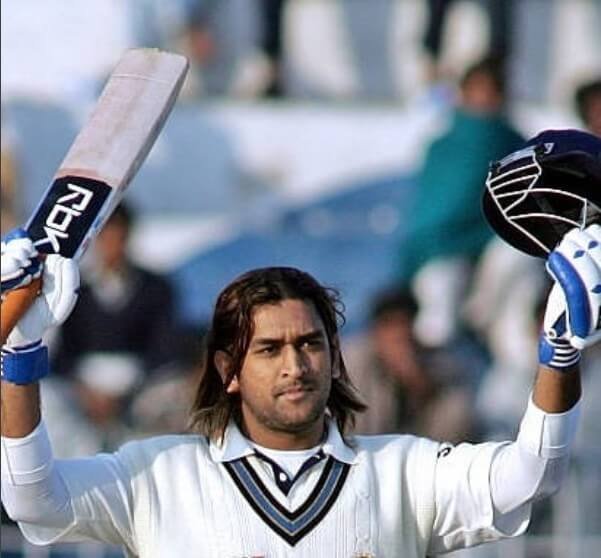
There couldn’t be a better stage for MS Dhoni and he pounced on the opportunity and announced his arrival in the game of cricket. In Visakhapatnam, Ganguly promoted him to bat at No.3 for the first time. He scored a magnificent 148 off just 123 balls that included 15 fours and 4 towering sixes. India scored a massive 356 and thumped the neighbors by 58 runs.

After that, another explosion from Dhoni’s bat came against Sri Lanka when he scored 183 runs, his highest ODI score till date. Very rapidly, he built a reputation of being a power hitter. But contrary to that, he later made a mark batting down the order when he finished matches for India. In short, there was no stopping MS Dhoni as he rose to the top of Indian cricket in no time.

The MS Dhoni era

The Indian team had traveled to the Caribbean to take part in the 2007 ODI World Cup. Led by Rahul Dravid, it was a star-studded unit with the likes of Sachin Tendulkar, Sourav Ganguly, Virender Sehwag, Anil Kumble and Harbhajan Singh. But opposite to the expectations, India crashed out of the tournament in the first round itself after suffering humiliating defeats at the hands of Bangladesh and Sri Lanka.

The team including MS Dhoni received huge criticism and rage from the fans. Later that year, the inaugural World Cup of T20 cricket was to be held in South Africa. All the big guns had pulled out of the squad and as a result, MS Dhoni became the captain of the side which had young and fresh talents.

Captaincy Era

India went on to lift the trophy and that was the official inception of the Dhoni era in Indian cricket, under his leadership. He became the ODI captain, after the victorious triumph. Leadership came naturally to him and once he got that, he flourished to his best. After Anil Kumble retired from international cricket, Dhoni became the skipper of all 3 formats for India.

During his captaincy, the Men in Blue achieved several remarkable victories that included the Commonwealth Bank tri-series in Australia. Team India went on to become No.1 in ICC Test Rankings in his reign.

MS Dhoni the Unstoppable

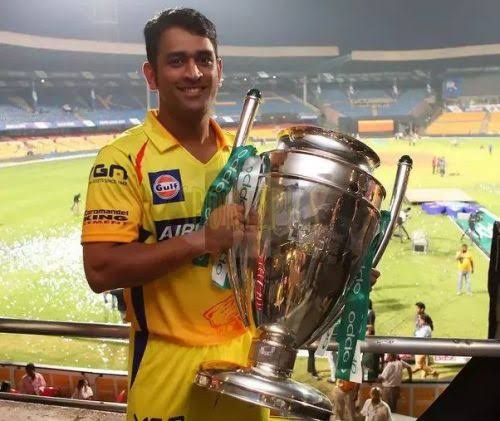
MS Dhoni overtook Ricky Ponting and became the No.1 ODI batsman in Rankings and amidst all this. He turned out to be the costliest player in the first-ever auction of the Indian Premier League and then went on to lead Chennai Super Kings to IPL titles on 2 occasions.

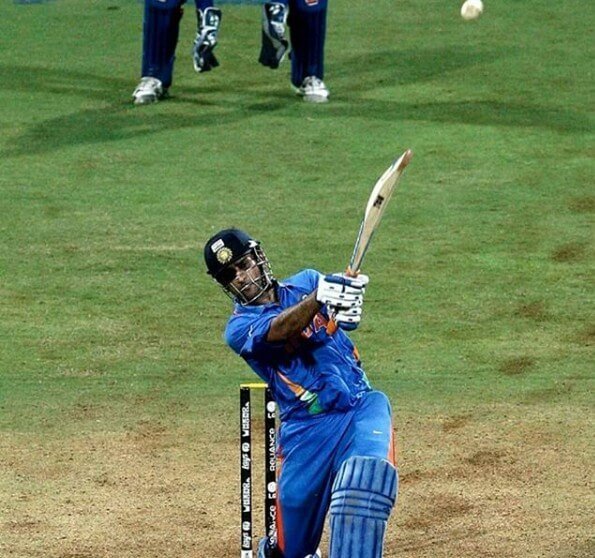
Dhoni was in no mood to stop and bagged the most significant achievement of his career when he led India to its second ODI World Cup triumph in 2011. Also, he played an inning of unbeaten 91 in the World Cup final against Sri Lanka at the Wankhede Stadium. That inning was one of the finest knocks in the history of the game. He soaked in the pressure and calmly took India past the line.

After 2 years, India won the ICC Champions Trophy in England with MS Dhoni being the captain. India reached the semi-finals of the ODI World Cup 2015 and World T20 2016. He relinquished the captaincy post that and handed over the reign to Virat Kohli across all 3 formats. He had retired from the longest format of the game in 2016 but went on to represent the side in ODIs and T20Is.

From CSK to CSK

His IPL franchise Chennai Super Kings was suspended for a couple of years. Because the owners of CSK were alleged to be involved in betting. As a result of this, he moved to a new franchise names Rising Pune Supergiant. He was named the captain of the side in 2016 but, the team didn’t do too well. In the next season, he was dropped from the captaincy role and Australia’s Steve Smith went on to lead. RPS made it to the final but lost to Mumbai Indians.

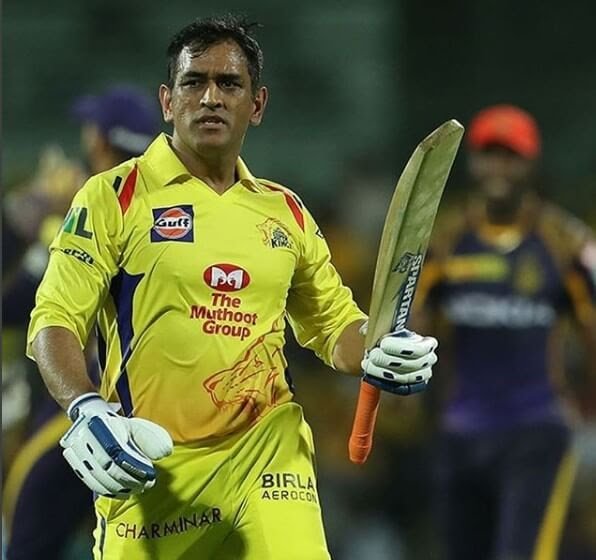
Recently, when Chennai Super Kings returned to the IPL after serving a suspension for 2 years, MS Dhoni was back as the leader once again. He brought them the 3rd IPL title as CSK equaled Mumbai Indians for the most number of IPL titles.

His personal form was great in the tournament. He was striking sixes and finishing matches for the side that brought the vintage MS Dhoni back on the field.

Struggle in the latter half

His brilliant run in the IPL 2018 brought hopes of his return to form in international cricket as well. But his form in the national colors remained a cause for concern as he failed to make a big impact with the bat. He was struggling to up the ante and wasn’t anywhere close to his best.

In 2018, the selectors dropped him from the national side for the shortest format of the game. As the selectors believed it was time to groom a new wicketkeeper. MS Dhoni was still a prominent member of ODI side as he had 2019 World Cup in the mind.

In short, his focus solely remains on the World Cup as he might hang up his boots after the coveted tournament. It remains to be seen whether the Captain Cool brings glory to the side once again. But one thing is for sure is that he will go down as one of the finest cricketers to have ever graced the game of cricket.

A great mentor

MS Dhoni may not be the captain of the Indian team anymore. Yet he remains a leader as Virat Kohli once rightly said to him, “You will always be our captain.”

Throughout his career, he wasn’t just a captain but a great mentor. Many cricketers give credit for their success to MS Dhoni. Indian cricketers like Ravindra Jadeja, Rohit Sharma owe their careers to him. They say, in spite of several failures of them in their initial careers, MS believed in them. And look what Rohit and Jadeja have been able to achieve now.

Dhoni proved to be a leader of the side even though he wasn’t the captain. Virat Kohli was lucky to have him in the side during his initial days of captaincy. Kohli would turn to Dhoni for advice and the legend would deliver like always.

Not just that, he aided the young spinners from behind the stumps. He groomed the young spinners like Yuzvendra Chahal and Kuldeep Yadav in his later stage of the career. Once MS calls it quits, there will be a huge void that would be impossible to fill.

The MS Dhoni Biography doesn’t just end here. There are several chapters that will arrive in his already illustrious career. Being a great mentor, he has a bright career in the coaching business. Despite leaving the game soon, we expect him to be associated with this beautiful game for a number of years to come.

MS Dhoni Awards and Achievements

Dhoni has been the recipient of many awards and various achievements. Some of them are

  • In 2008 and 2009, MS Dhoni won the ICC ODI Player of the year.
  • From 2008 to 2014, he was named in the ICC ODI XI (for 7 straight years). Also made it to the ICC Test XI in the years 2009, 2010 and 2013.
  • He has won 20 Man of the Match awards and 6 Man of the Series awards in ODI cricket. Along with that, he won the Man of the Match twice in Test cricket.
  • MS Dhoni received the Rajiv Gandhi Khel Ratna award in 2007.
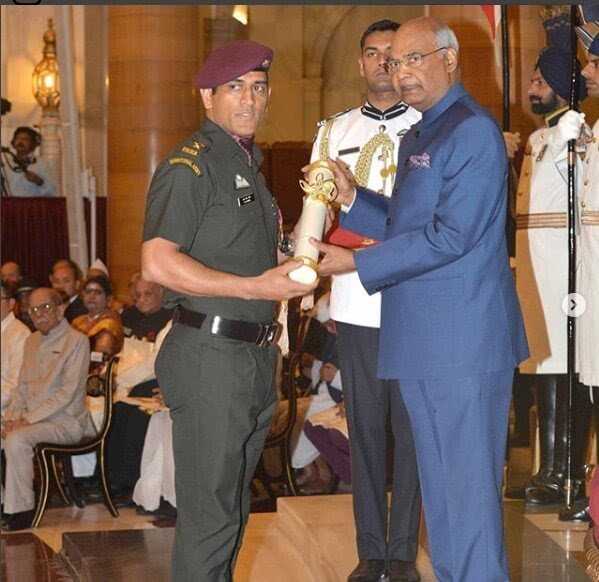
  • MS received the Padma Shri, India’s fourth highest civilian honor in the year 2009.
  • He received the Padma Bhushan, India’s third-highest civilian award in the year 2018.

MS Dhoni Records

  • Most number of sixes as a captain in international cricket.
  • Highest score as a wicketkeeper in ODIs (183).
  • First Indian wicketkeeper to score 4000 Test runs.
  • Only captain to lead in 50+ matches across all 3 formats.
  • Won most T20Is as a captain.
  • Most stumpings in international cricket.
  • Only captain to score a century batting at No.7 in ODIs.
  • First Indian captain to win a Test series in New Zealand.
  • Most centuries batting at No.7 in ODIs.
  • Most successful Indian captain in all 3 formats.
  • Highest ODI average as a wicketkeeper-batsman.
  • Highest unbeaten innings in successful ODI run-chases.
  • Most international matches as a captain (331).
  • Fifth fastest to score 10000 ODI runs
  • 200 matches as captain
  • 800 dismisles behind the stumps.

Li Lianjie

Jet Li

Martial Arts Expert (1963) APR 2, 2014

Jet Li is a champion martial artist and Chinese film actor. He starred in the Once Upon a Time in China film series and in the critically-praised, international hit Hero.

Born in Beijing, China, on April 26, 1963, Jet Li is an actor and martial artist. At the age of 11, Li won his first national championship in wushu. Li retired from the sport when he was 17 and made his film debut in Shaolin Temple, making him a star in his home country. Since 1994, he has gone back and forth between Chinese and English-language films, starring in Hollywood’s Romeo Must DieKiss of the Dragon and The Forbidden Kingdom.

Martial Arts Fame

Born Li Lian Jie on April 26, 1963, in Beijing, China, Jet Li is the youngest of five children. When Li was only 2 years old, he lost his father. At age 8, he began learning wushu, a form of martial arts. Noting his talent, his family sent him to continue his studies at a special school. “I was from a very poor family and we didn’t have enough money for a good school, so sports-school was good; it gave me good food and an opportunity out of China,” Li later explained to Muscle & Fitness magazine.

At the age of 11, Li won his first national championship. As a result, he traveled to more than 45 countries as part of the Bejing Wushu Team. In 1974, Li traveled to the United States and gave a martial arts demonstration for President Richard M. Nixon. He became the All-Around National Wushu Champion that year, a title he held for five consecutive years.

Li retired from the sport when he was 17. Working with director Chang Hsin Yen, he made his film debut in Shaolin Temple (1982). The film helped make Li a star in his native country, and spawned several sequels. By the end of the 1980s, Li had relocated to Hong Kong, where he became involved in the martial arts film scene. In Once Upon a Time in China (1991) he played Wong Fei-hung, a legendary hero who fights against foreigners in this 19th century tale. The popular film had two sequels.

Hollywood Hit

In 1998, Li landed his first English-language role, playing a bad guy in Lethal Weapon 4 with Mel Gibson and Danny Glover. He relocated to Los Angeles for the film, where he underwent intensive language training to prepare for his role as a Chinese crime boss. This action film, especially the scenes with Li, delighted movie audiences.

Li teamed up with rapper DMX and singer Aaliyah for Romeo Must Die (2000) a hip-hop-meets-martial-arts take on the classic tale of young love, Romeo and Juliet. Li and Aaliyah played star-crossed lovers from two warring crime families. The film scored big at the box office, earning roughly $100 million. In 2001, Li co-starred with Bridget Fonda in Kiss of the Dragon directed by Luc Besson. He helped develop the story for the film, which tells the tale of a wronged intelligence officer out to clear his name with the help of a prostitute (played by Fonda). A critic for The New York Times praised parts of the film, writing “his action sequences are like an oil fire, spilling from one room into the next and lighting the interiors with heat and wreckage. Mr. Li and his fisticuffs choreographer, Corey Yuen, have set a new standard for action here.”

That same year, Li starred in the convoluted science fiction tale, The One. He played the two main characters, an unsuspecting California sheriff and a ruthless killer who travels through parallel worlds to eliminate the other versions of himself. The film was panned by critics for its confusing plot and weak acting. Next, he worked with director Yimou Zhang on the Chinese historical drama Hero, in which Li played a warrior in 3rd century China. The movie was released in China in 2002, and earned an Academy Award nomination for Best Foreign Film. He then reunited with DMX for 2003’s crime thriller Cradle 2 the Grave, which received poor reviews and a lukewarm response from movie-goers.

The following year, Jet Li was on vacation in the Maldives when a tsunami hit. It was widely reported that he had died during the disaster. However, he only suffered a minor foot injury while guiding his 4-year-old daughter to safety.

Action Hero

Safe and back on the big screen, Li next starred in Unleashed (2005). He played a man who was a captive killing machine for a crime family. The character was trained to become violent after his collar was removed. To prepare for the role, Li worked with an acting coach. “We went to see wild dogs at the pound [to see] when they’re hungry, when they’re angry … I spent a few days on location at night, with just bread and water, so I could feel it,” Li explained to Muscle & Fitness magazine. The film performed well at the box office, opening at No. 3 in theaters.

In his next film, Fearless (2006), Li starred as the famed Chinese martial arts master Huo Yuanjia. The film tells the true story of Yuanjia’s near-death experience, the tragic loss of his family, and his triumphant victory over his foreign opponents in a martial arts competition. Critic Leonard Maltin called it “emotionally charged and visually striking.” Fans also enjoyed the film, helping it reach No. 2 at the box office in its opening weekend.

Li then played Rogue, a lethal assassin, in War (2007). In the film, Li plays a character who is pursued by the partner of an FBI agent he murdered. Critics panned the film, and it earned only $22 million at the box office. The same year, Li starred in the Chinese film The Warlords directed by Peter Chan.

In The Forbidden Kingdom (2008), Li had the opportunity work with another leading martial arts star, Jackie Chan. The film, however, proved to be a disappointment. As San Francisco Chronicle critic Peter Hartlaub wrote: “The movie also adequately answers the question why Chan and Li haven’t yet done a movie together in their collective 55-year careers: Chan is a much better actor. As for the fighting, and the movie, it’s pretty much a draw.”

Recent Work

Li had better luck with the Hollywood action sequel The Mummy: Tomb of the Dragon Emperor (2008). In this latest installment in The Mummy franchise, Li played a brutal Chinese emperor, buried with 10,000 terra cotta soldiers, who is awoken from his eternal slumbers by a young adventurer (Luke Ford). Brendan Fraser and Maria Bello play the adventurer’s parents who help him battle the evil emperor. Despite being derided by critics, the film scored with action fans. It brought in more than $100 million at the box office.

Continuing to move back and forth between Hollywood productions and Chinese language films, Li appeared in two other films. He starred in Ocean Paradise, a Chinese father-son drama. Li also had a supporting role in Sylvester Stallone 2010 film, The Expendables, about mercenaries who work together to overthrow a South American dictator. The cast also included Jason Statham, Dolph Lundgren, wrestler Steven Austin and ultimate fighter Randy Couture. In 2012 and 2014, he went on to star in the subsequent installments of the popular franchise.

Interested in charitable causes, Li serves as an ambassador for the Red Cross. He established the Jet Li One Foundation in partnership with the Red Cross Society of China. The organization works in several different areas, and provides disaster relief to the people of China.

Li married his wife Nina in 1999. The couple has two daughters together. Previously married to Qiuyan Huang from 1987 to 1990, Li has two daughters from his first marriage.


Design a site like this with WordPress.com
Get started